By Caleb Morgan
Updated November 2026
Parents searching for the best toddler sleep training clocks usually want one thing: a simple visual cue that tells a little one when it is still night and when it is safe to get up. The clocks in this guide were compared on the criteria that matter most for toddlers aged roughly 2 to 4: a clear color-change or “OK to wake” signal, a night light that is dim enough for bedtime, a sound option for calming, a timer or nap function, and a design that a child can read without help. Each pick is described from its listing details and widely reported owner feedback, not from hands-on testing.
Our top picks at a glance
- 1
 TOP CHOICEBest overallKids Alarm Clock, Ok to Wake Clock with Green Light Red Light, ToddlerView on Amazon
- 2
 TOP CHOICEBest for gentle wake-upsLittleHippo Mella: Kids Alarm Clock, Ready to Rise Children's Sleep TrView on Amazon
- 3
 TOP CHOICEBest for stay-in-bed routinesStay-in-Bed Clock for Kids – Toddler Sleep Trainer, Night Light & AlarmView on Amazon
- 4
 Best for dinosaur fansKids Alarm Clock, Toddler Sleep Training Clock with Night Lights, SounView on Amazon
- 5
 Best budget pickOK to Wake Clock for Kids, Sleep Training Clock with Night Light and SView on Amazon
- 6
 Best for nap timingRed Green Light, Nap Timer, Sound Machine Ok to Wake Sleep Training KiView on Amazon
Our Top Picks
Quick Comparison
| Product | Best for | Key feature |
|---|---|---|
| Kids Alarm Clock, Ok to Wake Clock with Green Light Red Light | Families who want a clear, simple signal | Green/red light wake indicator |
| LittleHippo Mella Kids Alarm Clock | Toddlers who need soft wake-ups | Night light, sound machine and wake signal |
| Stay-in-Bed Clock for Kids | Parents building a stay-in-bed habit | Sleep trainer with night light and alarm |
| Kids Alarm Clock, Toddler Sleep Training Clock with Night Lights | Dinosaur-loving toddlers | Night lights plus sound machine |
| OK to Wake Clock for Kids, Sleep Training Clock (Blue) | Bedrooms with limited space | Night light and sound machine |
| Red Green Light Nap Timer Sun Moon Alarm Clock | Nap-time and bedtime timing | Sun/moon display with nap timer |
Kids Alarm Clock, Ok to Wake Clock with Green Light Red Light, Toddler Sleep Training Clock for Children
Kids Alarm Clock, Ok to Wake Clock with Green Light Red Light, Toddler Sleep Training Clock for Children
Best for: Families who want a clear, no-words wake signal
This clock suits parents who want a direct visual rule: the light changes color when it is time to get up. It works well for toddlers who are just beginning to learn the difference between night and morning.
Key specs
- Green light indicates “OK to wake”; red light indicates “stay in bed”
- Designed as a toddler sleep training clock for children
Pros
- Simple color signal that does not require reading skills
- Clear purpose that is easy to explain to a toddler
- Works as a consistent cue across routines
Cons
- Light-only cue may not be enough for toddlers who need a sound or night light
- Owners sometimes mention the light can feel bright at full strength
Bottom line: A strong first choice for parents who want the simplest possible system and a clear green-means-go rule.
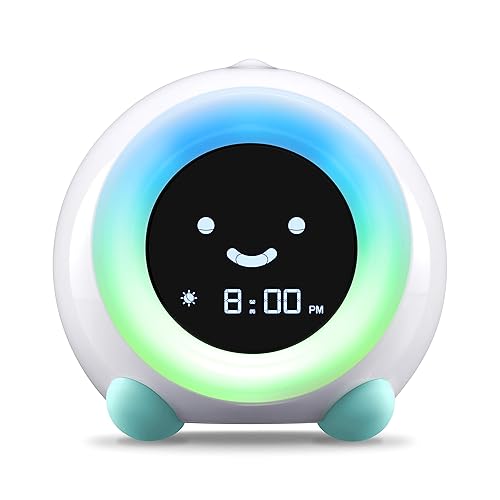
LittleHippo Mella: Kids Alarm Clock, Ready to Rise Children’s Sleep Trainer, Night Light, Sound Machine and OK to Wake for Toddlers and Kids – Arctic Blue (Updated 2025)
LittleHippo Mella: Kids Alarm Clock, Ready to Rise Children's Sleep Trainer, Night Light, Sound Machine and OK to Wake for Toddlers and Kids – Arctic Blue (Updated 2025)
Best for: Toddlers who need soft wake-ups and calming sounds
This model combines a night light, sound machine and wake signal in one unit, which suits families who use sound to help a child settle and want a gentler transition in the morning.
Key specs
- Night light and sound machine functions
- Ready-to-rise wake indicator for children
Pros
- Combines three bedtime tools in one device
- Sound machine can mask household noise
- Calm color options suit a bedroom setting
Cons
- More functions mean more settings to learn
- Some toddlers may find the sounds distracting at first
Bottom line: Best for families who want a multi-function clock and value a calm, sound-supported bedtime.
Stay-in-Bed Clock for Kids – Toddler Sleep Trainer, Night Light & Alarm
Stay-in-Bed Clock for Kids – Toddler Sleep Trainer, Night Light & Alarm
Best for: Parents building a stay-in-bed habit
This clock is aimed at parents whose main goal is helping a toddler stay in bed until a set morning time. The alarm and night light are meant to reinforce that routine over several weeks.
Key specs
- Built-in night light
- Alarm function for set wake times
Pros
- Focused purpose: stay-in-bed training
- Night light helps with nighttime trips to the bathroom
- Straightforward alarm setup
Cons
- Fewer sound options than multi-function models
- Consistency is required; the clock alone does not change behavior
Bottom line: A good match for families who want a focused stay-in-bed tool rather than a full sound machine.
Kids Alarm Clock, Toddler Sleep Training Clock with Night Lights, Sound Machine, Time to Wake Dinosaur Alarm Clock for Children (Green)
Kids Alarm Clock, Toddler Sleep Training Clock with Night Lights, Sound Machine, Time to Wake Dinosaur Alarm Clock for Children, Gift Ideas for Kids Toddler Boy Girl (Green)
Best for: Dinosaur-loving toddlers who respond to playful design
Themed clocks can increase a child’s interest in the routine. This dinosaur model pairs night lights with a sound machine and a time-to-wake display for toddlers who enjoy characters.
Key specs
- Night lights and sound machine
- Time-to-wake dinosaur design
Pros
- Themed design can make the clock more appealing
- Multiple bedtime tools in one unit
- Green color is calm for a bedroom
Cons
- Character design may lose appeal as interests change
- Owners sometimes report the sound settings take a few tries to set up
Bottom line: Ideal for toddlers who respond to dinosaurs and similar themes and for parents who want sound and light together.
OK to Wake Clock for Kids, Sleep Training Clock with Night Light and Sound Machine, Kids Alarm Clock for Bedrooms (Blue)
OK to Wake Clock for Kids, Sleep Training Clock with Night Light and Sound Machine, Kids Alarm Clock for Bedrooms (Blue)
Best for: Bedrooms with limited space and a budget-minded shopper
This blue model covers the core features most families need: an OK-to-wake signal, a night light and a sound machine, in a compact footprint that fits on a crowded nightstand.
Key specs
- OK-to-wake signal
- Night light and sound machine
Pros
- Covers the essential features without extras
- Compact size suits small bedrooms
- Generally a budget-friendly option within this category
Cons
- Fewer themed or premium features
- Build quality may feel lighter than premium models
Bottom line: A sensible choice for parents who want the core toddler sleep training features without paying for add-ons.
Red Green Light, Nap Timer, Sound Machine Ok to Wake Sleep Training Kids Sun Moon Alarm Clock for Toddler Child
Red Green Light, Nap Timer, Sound Machine Ok to Wake Sleep Training Kids Sun Moon Alarm Clock for Toddler Child
Best for: Nap-time and bedtime timing
Because toddlers still take naps, a nap timer and sun/moon display can help parents separate day from night. This model is built around that need, with a sound machine added for settling.
Key specs
- Red and green light signals
- Nap timer and sound machine
- Sun and moon icons for day and night
Pros
- Nap timer is useful for daytime routines
- Sun/moon icons make day versus night intuitive
- Sound machine supports settling
Cons
- Nap function adds settings that take time to learn
- Icons may be small for some toddlers to read from the bed
Bottom line: Best for families who need help with both naps and night sleep and want a day-and-night cue.
Buying Guide
Wake signal type
Look for a clear color or symbol that changes at your chosen wake time. Green-for-go and red-for-stay conventions are common in this category, and a toddler can learn them quickly if you use the same words every morning.
Good picks for this: Kids Alarm Clock, Ok to Wake Clock with Green Light Red Light; OK to Wake Clock for Kids (Blue)
Night light brightness
A night light should be dim enough that it does not stimulate a child at bedtime. Many parents use a warm, low setting. Check whether brightness is adjustable before you buy.
Good picks for this: LittleHippo Mella Kids Alarm Clock; Stay-in-Bed Clock for Kids
Sound machine options
White noise or gentle nature sounds can mask hallway noise and help a toddler settle. Confirm the volume range and whether sounds shut off automatically.
Good picks for this: LittleHippo Mella Kids Alarm Clock; Kids Alarm Clock, Toddler Sleep Training Clock with Night Lights (Green)
Nap timer and day-night display
If your toddler still naps, a timer or sun/moon display can help separate daytime rest from nighttime sleep. Consider whether you will use the nap feature regularly before paying extra for it.
Good picks for this: Red Green Light Nap Timer Sun Moon Alarm Clock
Size and placement
Measure your nightstand or shelf before choosing. Compact clocks suit small rooms, while larger displays are easier to read from a bed or across a room. Keep the clock out of reach of cribs and beds to avoid cord or battery hazards.
Good picks for this: OK to Wake Clock for Kids (Blue); Stay-in-Bed Clock for Kids
Ease of setup
Some clocks have multiple buttons and modes. Owners frequently report that setup is easier when the clock has a single wake-time setting and a clear manual. Practice the settings before your toddler’s first morning with the clock.
Good picks for this: Kids Alarm Clock, Ok to Wake Clock with Green Light Red Light; Stay-in-Bed Clock for Kids
Theme and durability
Themed designs can increase a child’s interest, but characters can fade as interests change. Plastic housings are common in this category; check the listing for materials and whether the clock is meant for supervised use only.
Good picks for this: Kids Alarm Clock, Toddler Sleep Training Clock with Night Lights (Green); Red Green Light Nap Timer Sun Moon Alarm Clock
FAQ
When should I start using a toddler sleep training clock?
Many families start between ages 2 and 3, once a toddler can follow a simple routine and understand color cues. Begin when your child is generally settled at bedtime, not during a major transition such as a new sibling or a move.
Does a sleep training clock work on its own?
A clock is a visual cue, not a complete plan. Results usually depend on a consistent bedtime routine, a set wake time and calm responses when your child gets up early.
What wake time should I set?
Choose a time that matches your family’s normal morning, often between 6:00 and 7:30 a.m., and keep it the same every day, including weekends, so the cue stays predictable.
Can a sleep training clock help with naps?
Some models include a nap timer or sun/moon display that can help separate daytime rest from nighttime sleep. Whether it helps depends on your toddler’s nap schedule and how consistently you use the timer.
How bright should the night light be?
Choose a dim, warm light that lets your child see the room without being stimulating. If your toddler is still very young or has trouble settling, consult your pediatrician about sleep concerns.
What if my toddler gets out of bed before the wake signal?
Calmly return your child to bed without much conversation, and keep the response the same each time. Consistency matters more than the clock model itself. For persistent sleep problems, consult your pediatrician.
Are sound machines safe for toddlers?
Keep the volume low and place the device at a safe distance from the crib or bed. Check the manufacturer’s guidance on volume and placement, and ask your pediatrician if you have concerns.
Conclusion
For a simple, visual rule, the green-and-red light models are a strong starting point. Families who want sound and a night light together may prefer the LittleHippo Mella or the dinosaur-themed option. If nap timing is part of the problem, the nap timer model is worth a look, and the blue budget-friendly clock covers the essentials for a small room. Choose the feature set that matches your toddler’s needs, and give any clock several consistent weeks before judging whether it works.
Sources
- Consumer safety guidance on children's products, including cords, batteries and nursery items (cpsc.gov)
- Pediatric guidance on toddler sleep routines, bedtime habits and night waking (healthychildren.org)
- Recommendations on infant and child sleep environment and safe sleep practices (cdc.gov)
Related reading
- 7 Best Toddler Sleep Training Clock Picks for Better Nights (2026)
- Top 6 Learn & Climb Toddler Sleep Clocks for Better Nights
- Supernanny Sleep Training Toddler: 7 Best Books and Guides (2026)
- Sleep Training Toddler Climbing Out of Crib: 7 Best Picks (2026)
- Sleep Training Strong Willed Toddler: 5 Best Books Compared (2026)
- Gentle Sleep Training Toddler: 7 Best Books and Guides (2026)
About Caleb Morgan
Caleb Morgan is part of our editorial team and reviews and edits our toddler development & behavior guides, checking product details against manufacturer specifications and owner feedback.