 By Caleb Morgan
Updated November 2026
Parents looking for a toddler sleep training clock usually want one thing: a simple visual cue that tells a child when it is time to stay in bed and when it is time to get up. These clocks, often called “ok to wake” clocks, use a color change or a set time to signal the start of the morning. This guide compares seven popular options from the Amazon US catalog. The selection criteria were product specifications, brand reputation and patterns in owner feedback, focusing on light signal clarity, night light and sound features, timer flexibility, ease of setup and how well each design suits a child aged roughly 1 to 4. Before you buy, it helps to read about toddler sleep basics too, since no clock works alone.
Our top picks at a glance
- 1
 TOP CHOICEBest overallKids Alarm Clock, Ok to Wake Clock with Green Light Red Light, ToddlerView on Amazon
- 2
 TOP CHOICEBest for a simple sleep routineStay-in-Bed Clock for Kids – Toddler Sleep Trainer, Night Light & AlarmView on Amazon
- 3
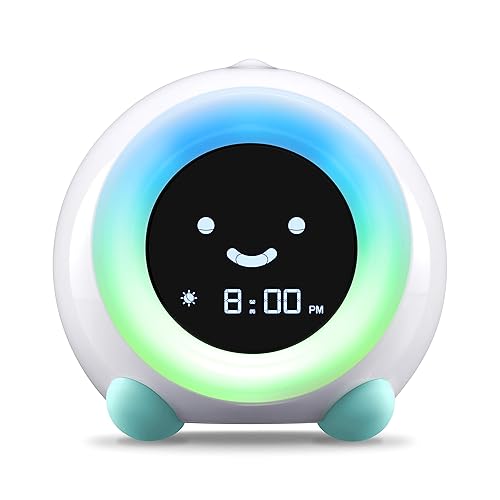 TOP CHOICEBest for a bedroom with a sound machine needLittleHippo Mella: Kids Alarm Clock, Ready to Rise Children's Sleep TrView on Amazon
- 4
 Best for nap timingRed Green Light, Nap Timer, Sound Machine Ok to Wake Sleep Training KiView on Amazon
- 5
 Best for a theme-loving childKids Alarm Clock, Toddler Sleep Training Clock with Night Lights, SounView on Amazon
- 6
 Best budget pickRed Green Light & Emoji, Night Light with Auto-Off Timer, Gift for 2-1View on Amazon
- 7
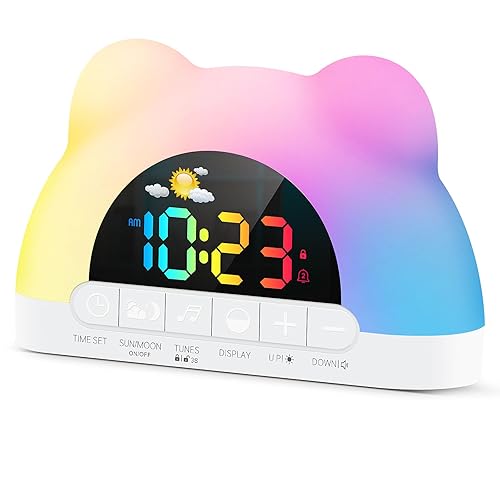 Best for older toddlers and shared roomsAlarm Clock for Kids, Ok to Wake Clock with Green Light Red Light, ChiView on Amazon
Our Top Picks
The table below summarizes the seven options. Each product is then described in more detail, including who it suits, its main specifications as stated by the listing, and the trade-offs owners commonly mention.
| Product | Best for | Key feature |
|---|---|---|
| Kids Alarm Clock, Ok to Wake Clock with Green Light Red Light | Most families starting a sleep training routine | Green/red light wake signal |
| Stay-in-Bed Clock for Kids | Simple, low-stimulation bedrooms | Sleep trainer with night light and alarm |
| LittleHippo Mella Kids Alarm Clock | Children who need background sound | Built-in sound machine |
| Red Green Light Nap Timer Sleep Training Clock | Managing naps as well as nights | Nap timer with sun and moon icons |
| Toddler Sleep Training Clock with Dinosaur Design | Children who respond to themed decor | Dinosaur-style design with night lights |
| Red Green Light & Emoji Night Light Sleep Trainer | Families on a tighter budget | Emoji display and auto-off night light |
| Alarm Clock for Kids with Dual Alarms | Older toddlers and shared rooms | Dual alarms and adjustable brightness |
Kids Alarm Clock, Ok to Wake Clock with Green Light Red Light, Toddler Sleep Training Clock for Children
Kids Alarm Clock, Ok to Wake Clock with Green Light Red Light, Toddler Sleep Training Clock for Children
Best for: Families who want a straightforward green-light-means-go system for a child around 2 to 4 years old.
This is a dedicated sleep training clock built around a clear color signal. It suits parents who want the child to understand one simple rule: stay in bed on red, and get up when it turns green. It works well as a first clock for families who have not used a visual cue before.
Key specs
- Green light and red light wake signal
- Designed as an “ok to wake” clock for children
- Digital time display
Pros
- The color signal is easy for a young child to recognize.
- Designed specifically for sleep training rather than adapted from an adult alarm.
- Simple setup for parents who want to start quickly.
Cons
- Owners often report that the light can be bright in a dark room, so placement matters.
- Fewer extras than sound-machine models.
Bottom line: A strong default choice for parents who want a clear, purpose-built visual cue without extra features.
Stay-in-Bed Clock for Kids – Toddler Sleep Trainer, Night Light & Alarm
Stay-in-Bed Clock for Kids – Toddler Sleep Trainer, Night Light & Alarm
Best for: Parents who want a simple routine with a night light and alarm in one device.
This model is built for the “stay in bed until the clock says so” approach. It combines a night light for nighttime bathroom trips with an alarm for the morning, which can reduce the number of separate gadgets in the room.
Key specs
- Sleep trainer function with night light
- Built-in alarm
- Designed for toddler bedrooms
Pros
- Combines a night light and clock in one unit.
- Straightforward for consistent daily use.
- Useful for children who need a soft light during the night.
Cons
- Fewer color options than some competitors.
- Owners sometimes mention that the alarm volume is modest.
Bottom line: A good fit for parents who want a night light and sleep trainer together in a simple package.
LittleHippo Mella: Kids Alarm Clock, Ready to Rise Children’s Sleep Trainer, Night Light, Sound Machine and OK to Wake for Toddlers and Kids – Arctic Blue (Updated 2025)
LittleHippo Mella: Kids Alarm Clock, Ready to Rise Children's Sleep Trainer, Night Light, Sound Machine and OK to Wake for Toddlers and Kids – Arctic Blue (Updated 2025)
Best for: Children who sleep better with white noise or soft sound in the room.
The Mella combines a sleep trainer, night light and sound machine. It is a good option for families whose toddler wakes easily to household noise, or who want consistent background sound at naptime and bedtime.
Key specs
- Ready to Rise sleep trainer function
- Night light
- Built-in sound machine
Pros
- Sound machine helps mask outside noise.
- Multiple functions in one device.
- The “Ready to Rise” approach gives a clear morning cue.
Cons
- More features can mean more settings to learn.
- Some children are sensitive to continuous sound, so trial and error may be needed.
Bottom line: Best for families who want a sound machine and sleep trainer together in one device.
Red Green Light, Nap Timer, Sound Machine Ok to Wake Sleep Training Kids Sun Moon Alarm Clock for Toddler Child
Red Green Light, Nap Timer, Sound Machine Ok to Wake Sleep Training Kids Sun Moon Alarm Clock for Toddler Child
Best for: Parents who need help with daytime naps as well as nighttime sleep.
The name points to a nap timer and sun-and-moon icons, which can help a toddler connect the visual cue with day and night. It is a practical choice for families managing a transition from two naps to one, or for daycare schedules.
Key specs
- Red and green light signal
- Nap timer function
- Sun and moon alarm icons
- Sound machine
Pros
- Covers both nap and night routines.
- Sun and moon icons reinforce the idea of day versus night.
- Sound machine option adds comfort at naptime.
Cons
- Nap timer settings can take a few tries to set up correctly.
- Owners sometimes find the icons small at a distance.
Bottom line: A strong pick for parents who need a single clock that handles naps and nights.
Kids Alarm Clock, Toddler Sleep Training Clock with Night Lights, Sound Machine, Time to Wake Dinosaur Alarm Clock for Children (Green)
Kids Alarm Clock, Toddler Sleep Training Clock with Night Lights, Sound Machine, Time to Wake Dinosaur Alarm Clock for Children, Gift Ideas for Kids Toddler Boy Girl (Green)
Best for: Children who are motivated by themes and want a clock they will like looking at.
This dinosaur-themed model is aimed at kids who respond well to playful design. Themed clocks can make the morning cue more appealing, which some parents find helps with buy-in.
Key specs
- Dinosaur design
- Night lights
- Sound machine
- Time to wake function
Pros
- Themed design often appeals to young children.
- Combines night lights and sound in one unit.
- Works as a bedroom decor piece as well.
Cons
- Character designs may lose appeal once a child outgrows the theme.
- Owners often say the sound machine volume is best kept low.
Bottom line: Ideal for a dinosaur fan who needs a little extra motivation to stay in bed.
Red Green Light & Emoji, Night Light with Auto-Off Timer, Gift for 2-10 Years Old Kids Ok to Wake Alarm Clock for Toddlers, Children’s Sleep Trainer
Red Green Light & Emoji, Night Light with Auto-Off Timer, Gift for 2-10 Years Old Kids Ok to Wake Alarm Clock for Toddlers, Children's Sleep Trainer
Best for: Families who want the core sleep training features without paying for extras.
This model combines a red and green signal with emoji-style display and an auto-off night light. The auto-off timer is useful for parents who do not want the light running all night.
Key specs
- Red and green light signal
- Emoji display
- Night light with auto-off timer
Pros
- Auto-off timer prevents the light from running all night.
- Emoji display is easy for young children to read.
- Works for a wide age range listed as 2 to 10 years.
Cons
- Fewer advanced settings than premium options.
- Owners sometimes mention the emoji faces are simple, which may not hold older kids’ interest.
Bottom line: A practical budget pick for parents who want the essentials done well.
Alarm Clock for Kids, Ok to Wake Clock with Green Light Red Light, Children’s Sleep Trainer, 10 Ringtones, 3 Brightness, Dual Alarms, Digital Alarm Clock for Adults Boy Girl Toddler Bedroom
Alarm Clock for Kids, Ok to Wake Clock with Green Light Red Light, Children's Sleep Trainer,10 Ringtones,3 Brightness, Dual Alarms, Digital Alarm Clock for Adults Boy Girl Toddler Bedroom
Best for: Older toddlers and families who want flexible alarm options, including shared rooms.
This clock offers the most adjustable features on the list, including ten ringtones, three brightness levels and dual alarms. That flexibility can help as a child grows, though it also means more setup.
Key specs
- Green and red light ok-to-wake signal
- 10 ringtones
- 3 brightness levels
- Dual alarms
Pros
- Brightness settings suit both bedtime and daytime use.
- Dual alarms can serve more than one routine.
- Ringtone choice helps for older children and adults in the room.
Cons
- Larger feature set can take longer to configure.
- Marketed for adults as well, so some parents may find it more clock than they need.
Bottom line: Best for families who want adjustable settings that can grow with an older toddler.
Buying Guide
Choosing a toddler sleep training clock comes down to a handful of practical factors. The points below help you match a clock to your child’s age, room and routine.
Light signal clarity
A sleep training clock works only if your child can read the signal. Look for a clear color change, usually green for “ok to get up” and red for “stay in bed.” Some parents find that a dimmer, steady light is easier for young children to understand than a flashing one.
Good picks for this: Kids Alarm Clock, Ok to Wake Clock with Green Light Red Light; Red Green Light & Emoji Night Light Sleep Trainer
Night light and brightness control
Many toddlers need a soft light for nighttime bathroom trips. Check whether the night light can be dimmed or set to turn off automatically. Some models list multiple brightness levels, which can matter in a dark room where a bright display may keep a child awake.
Good picks for this: Alarm Clock for Kids with Dual Alarms; Stay-in-Bed Clock for Kids
Sound machine and white noise
If your home is noisy or your child is sensitive to sound, a built-in sound machine can help. Some children respond well to steady white noise, while others find any continuous sound distracting. Start at a low volume and adjust.
Good picks for this: LittleHippo Mella Kids Alarm Clock; Kids Alarm Clock with Dinosaur Design
Naps and timers
If your child still naps, a clock with a nap timer or adjustable timer can prevent a short nap from turning into a long one. Look for a clock that lets you set separate times for daytime and nighttime routines.
Good picks for this: Red Green Light, Nap Timer, Sound Machine Ok to Wake Sleep Training Clock
Size, placement and fit
A clock should be placed where a child can see it from bed but not where it shines directly into their eyes. Measure your nightstand or dresser before buying. Compact models fit better in small bedrooms, while larger displays are easier to read from across the room.
Good picks for this: Stay-in-Bed Clock for Kids; Red Green Light & Emoji Night Light Sleep Trainer
Durability and everyday handling
Toddlers handle their belongings roughly. Look for a sturdy housing and a secure battery or power cover. Owners often report that clocks with easily removed battery covers can be a problem if a child gets into them, so check the design and keep small parts out of reach.
Good picks for this: Kids Alarm Clock, Ok to Wake Clock with Green Light Red Light; LittleHippo Mella Kids Alarm Clock
Theme and long-term use
Themed clocks can increase a child’s interest, but characters often fade from favor within a year or two. A neutral design may last longer, especially if the clock will be used through the preschool years.
Good picks for this: Alarm Clock for Kids with Dual Alarms; Kids Alarm Clock with Dinosaur Design
FAQ
What age is a toddler sleep training clock for?
Most of these clocks are designed for children from about 2 to 4 years old, though some listings extend to older kids. Children under 2 usually need a different approach to sleep, and parents should check with a pediatrician before starting any new routine for a very young child.
How do I start using a sleep training clock?
Set the clock to your desired wake time and explain the rule in simple words: stay in bed until the light changes. Begin during the day so your child can practice. Many families start by taking the rule a few minutes at a time before expecting it at bedtime and in the morning.
Should the clock be in the room at night?
Yes, if the clock is meant to signal wake time. Place it where your child can see it from bed. Avoid placing it so the light shines directly at their face, because bright light can make falling asleep harder.
Are these clocks safe for toddlers?
Generally, these clocks are designed for bedroom use, but parents should check that batteries are secured and that the clock is out of reach. If your child has a medical condition affecting sleep, such as sleep apnea, consult a pediatrician before making changes to nighttime routines.
What if my child still gets out of bed?
Consistency matters more than the device. Walk your child back to bed calmly without extended conversation, and keep the same response each time. If problems continue for several weeks or are paired with snoring, breathing difficulties or daytime exhaustion, speak with your child’s doctor.
Can a sleep training clock help with naps?
Some models include a nap timer or let you set separate times for daytime rest. Check the product description to see whether you can set a nap mode before buying.
Do I need a sound machine too?
Not always. If your home is quiet and your child sleeps well, a clock with a night light may be enough. If outside noise wakes your child, a built-in sound machine can help.
Conclusion
For most families, the Kids Alarm Clock with the green and red light is the most straightforward starting point. Parents who want a night light and clock in one device may prefer the Stay-in-Bed Clock. If sound matters, the LittleHippo Mella combines a sleep trainer with a sound machine. Families managing both naps and nights may find the Red Green Light Nap Timer most practical, while the dinosaur-themed model suits children who are motivated by design. The emoji-style budget option is a sensible choice for a basic setup, and the dual-alarm clock fits older toddlers and shared rooms. Whichever you choose, a clock works best alongside a consistent bedtime routine.
Sources
- Healthy sleep guidance for young children, including bedtime routines and consistent wake times (aap.org)
- Information on childhood sleep needs and safe sleep environments (cdc.gov)
- Product safety information for children's bedroom items and battery safety (cpsc.gov)
Related reading
- Toddler Won't Sleep in Crib: 7 Steps That Actually Help Tonight
- Toddler Won't Sleep at Night: A Step-by-Step Guide for Parents
- Toddler Won't Sleep at Daycare: 7 Steps That Actually Help
- Toddler Won't Sleep Without Dummy? A Step-by-Step Weaning Guide
- Toddler Won't Sleep Unless Touching Me: 5 Best Sleep Aids Compared
- Toddler Won't Sleep Unless Held: 7 Steps to Independent Sleep
About Caleb Morgan
Caleb Morgan is part of our editorial team and reviews and edits our toddler development & behavior guides, checking product details against manufacturer specifications and owner feedback.