 By Audrey Hayes
Updated November 2026
Choosing from the many potty training books for parents on the shelf can feel overwhelming, especially when every cover promises a dry toddler in a weekend. This list narrows the field to six titles that differ in approach, length and tone. Each was selected on the basis of publisher specifications, the author’s background as far as it is publicly stated, the level of practical detail inside, and the patterns owners tend to describe in their reviews. None of these were tested by us, so treat the picks as a research-based starting point rather than a verdict on how any book will work in your home.
Our top picks at a glance
- 1
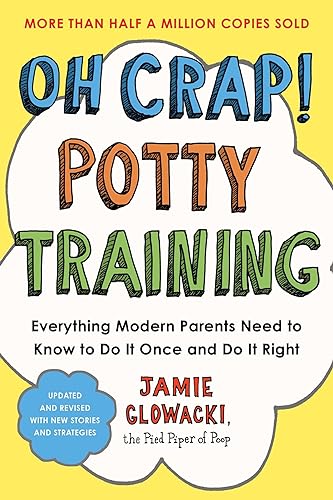 TOP CHOICEBest overallOh Crap! Potty Training: Everything Modern Parents Need to Know to DoView on Amazon
- 2
 TOP CHOICEBest for first-time parentsThe First-Time Parent's Guide to Potty Training: How to Ditch Diapers Fast (and for Good!)View on Amazon
- 3
 TOP CHOICEBest for quick, visual learnersThe Simplest Potty Training Book In The World: The Illustrated, Practical GuideView on Amazon
- 4
 Best for intentional, modern parentsGood to Go: A Fresh Take on Potty Training for Today's Intentional ParentView on Amazon
- 5
 Best for a gentle, Montessori-style approachPotty Training: A Simple Step-by-Step Guide for Parents to Toilet TraiView on Amazon
- 6
 Best budget-minded referenceThe Toilet Training Book: Easy and Fun Parenting Guide (The Potty Training Series)View on Amazon
Our Top Picks
Quick Comparison
| Product | Best for | Key feature |
|---|---|---|
| Oh Crap! Potty Training | Parents who want a direct, no-nonsense method | Short, action-first chapters |
| The First-Time Parent’s Guide to Potty Training | First-time parents unsure where to begin | Starts with readiness and preparation |
| The Simplest Potty Training Book In The World | Parents who prefer pictures to long text | Illustrated, practical layout |
| Good to Go | Intentional parents who want a modern framework | Fresh, mindset-focused approach |
| Potty Training: A Simple Step-by-Step Guide | Parents drawn to a Montessori philosophy | Child-led, patient method |
| The Toilet Training Book | Parents who want a full reference from start to finish | Covers preparation through implementation |
Oh Crap! Potty Training: Everything Modern Parents Need to Know to Do It Once and Do It Right
Oh Crap! Potty Training: Everything Modern Parents Need to Know to Do It Once and Do It Right (Oh Crap Parenting)
Best for: Parents who want a direct, step-by-step method and prefer to get through the book quickly.
This book suits parents who feel they need clear instructions and a firm sense of sequence. It is written in a brisk, confident voice and aims to get a child trained in a focused stretch rather than over many months of loose effort.
Key specs
- Format: paperback guide
- Part of the Oh Crap Parenting series
- Written for parents of toddlers preparing for toilet training
Pros
- Clear, action-oriented steps that are easy to follow
- Short chapters suited to reading in small pieces
- Addresses the common worry of “doing it once” rather than drifting for months
Cons
- The blunt tone may not suit parents who prefer a gentle style
- Less emphasis on child-led pacing than some alternatives
Bottom line: A strong pick for parents who want a decisive plan and are ready to commit to a focused training period.
The First-Time Parent’s Guide to Potty Training: How to Ditch Diapers Fast (and for Good!)
The First-Time Parent's Guide to Potty Training: How to Ditch Diapers Fast (and for Good!)
Best for: First-time parents who want reassurance and a clear starting point.
If you have never trained a child before, this book leans into the basics: how to judge readiness, what to buy, and how to prepare the household. It is designed to reduce the guesswork that makes many first attempts stall.
Key specs
- Format: paperback guide
- Aimed at first-time parents of toddlers
- Covers preparation through daily routine
Pros
- Good coverage of readiness signs and early preparation
- Reassuring tone for parents who feel anxious about the process
- Practical checklists for setting up the training period
Cons
- Parents with prior experience may find the early chapters repetitive
- Less depth on handling advanced challenges such as nighttime dryness
Bottom line: Best suited to first-time parents who want a calm, foundational guide before they start.
The Simplest Potty Training Book In The World: The Illustrated, Practical Guide
The Simplest Potty Training Book In The World | The Illustrated, Practical Guide For Quick And Stress-Free Potty Success | Helping Parents of Toddlers Ditch Diapers Fast, Easy and Confidently
Best for: Parents who learn better from pictures and short, scannable instructions.
This title leans on illustrations and a compact layout. It may appeal to parents who find long blocks of text hard to digest while managing a toddler, or who want something they can glance at during a training day.
Key specs
- Format: illustrated paperback
- Designed for parents of toddlers ditching diapers
- Practical, quick-reference structure
Pros
- Illustrations make key steps easy to recall
- Compact enough to keep nearby during the day
- Straightforward language with little jargon
Cons
- Less detailed on troubleshooting than longer guides
- Parents who want deep background on child development may want more
Bottom line: A good match for visual learners who want a quick, usable reference rather than an extended read.
Good to Go: A Fresh Take on Potty Training for Today’s Intentional Parent
Good to Go: A Fresh Take on Potty Training for Today's Intentional Parent
Best for: Intentional parents who want a modern framework and a mindset-first approach.
Rather than focusing only on mechanics, this book frames potty training as a relationship and communication process. It suits parents who want to understand the “why” behind each step before committing to a method.
Key specs
- Format: paperback guide
- Written in a contemporary, intentional-parenting style
Pros
- Emphasizes emotional readiness and communication
- Useful framing for parents who dislike rigid timelines
- Fresh perspective that differs from older, traditional guides
Cons
- Parents seeking a fast, step-by-step schedule may find it too open-ended
- Some readers may want more concrete day-by-day structure
Bottom line: Recommended for parents who value a thoughtful, relationship-focused approach over a strict timetable.
Potty Training: A Simple Step-by-Step Guide for Parents to Toilet Train with Love and Patience
Potty Training: A Simple Step-by-Step Guide for Parents to Toilet Train with Love and Patience. A Montessori Approach
Best for: Parents drawn to a Montessori-influenced, child-led approach.
This guide follows the Montessori idea that children master skills when they are ready and given room to practice independently. It is a good fit for parents who want to avoid pressure and let the child set much of the pace.
Key specs
- Format: paperback guide
- Montessori-informed approach to toilet training
- Step-by-step structure
Pros
- Gentle, patient tone that reduces power struggles
- Respects the child’s readiness and independence
- Clear sequence for parents who want structure within a relaxed method
Cons
- A child-led pace can take longer than a fixed schedule
- Parents needing a fast result may find it slow
Bottom line: A strong choice for parents who prefer patience and a child-centered philosophy.
The Toilet Training Book: Easy and Fun Parenting Guide (The Potty Training Series)
The Toilet Training Book: Easy and fun parenting guide with everything you need to know from preparation – through training – to implementation (The Potty Training Series)
Best for: Parents who want a complete reference covering every stage from preparation to daily routine.
This title is positioned as a comprehensive guide that moves through preparation, training and follow-through. It suits parents who want one book to keep on hand for the whole process rather than several shorter ones.
Key specs
- Format: paperback, part of The Potty Training Series
- Covers preparation, training and implementation
Pros
- End-to-end coverage in a single volume
- Upbeat tone that many parents find encouraging
- Useful as a long-term reference
Cons
- Breadth can mean less depth on specific problems
- Some sections may feel general for experienced parents
Bottom line: A practical choice for parents who want a single, complete reference for the whole training journey.
Buying Guide
Match the Book to Your Parenting Style
Some books are brisk and directive, while others focus on child-led readiness or emotional communication. Decide whether you want a firm plan, a gentle framework or something in between before you choose. A mismatch in tone is one of the most common reasons parents abandon a guide partway through.
Good picks for this: Oh Crap! Potty Training, Potty Training: A Simple Step-by-Step Guide
Check the Level of Detail
Look at the table of contents. A book that covers readiness, preparation, daily routine, accidents and nighttime training will serve you longer than one that stops at the first week. Shorter books are easier to read but may leave gaps once problems appear.
Good picks for this: The Toilet Training Book, The First-Time Parent’s Guide to Potty Training
Consider Your Learning Style
If you skim, illustrations and bullet-point summaries help you find answers quickly during a busy day. If you prefer background, a longer narrative explains why certain steps work. Neither is better in general; choose the format you will actually open.
Good picks for this: The Simplest Potty Training Book In The World, Good to Go
Check the Age Range and Readiness Guidance
Readiness signs usually appear somewhere between about 18 and 30 months, though the range is wide and depends on the child. A good book should explain how to recognize readiness rather than assuming a fixed age. Be cautious of any title that promises results on a set day regardless of your child.
Good picks for this: The First-Time Parent’s Guide to Potty Training, Potty Training: A Simple Step-by-Step Guide
Think About Print Format and Portability
Paperbacks are easy to keep in a diaper bag or on the bathroom shelf. Illustrated guides can be harder to flip through quickly on a small page, so consider whether you will reference it mid-day. Check the page count and dimensions in the listing before buying.
Good picks for this: The Simplest Potty Training Book In The World, Oh Crap! Potty Training
Look at Whether It Covers Setbacks
Accidents, regression and resistance are normal parts of toilet training. A book that addresses them with specific responses will help you avoid abandoning the process after a rough week. Scan the index for terms like “accidents,” “regression” or “fear of the toilet.”
Good picks for this: The Toilet Training Book, Good to Go
FAQ
Do I need a book to potty train my toddler?
No. Many children are trained successfully without any guide. A book can help if you want a clear structure, want to reduce uncertainty, or are working with a partner who needs a shared plan. Pediatric sources generally emphasize readiness and a calm, consistent approach over any particular method.
What age should I start using a potty training book?
You can read ahead at any age, but most parents begin when they notice readiness signs, often between roughly 18 and 30 months. Reading in advance can help you prepare, though the timing of actual training depends on your child.
Are all potty training books based on the same method?
No. Approaches differ. Some use a short, intensive training period, others are child-led, and some focus on communication and emotional readiness. Read a sample or the table of contents before deciding.
How long does it usually take to potty train with a book?
Timelines vary widely. Some children learn daytime control within a few days of focused effort, while others take several months. Be wary of any book that promises a guaranteed timeline for every child.
Should both parents read the same book?
It helps if caregivers use a consistent approach. Reading the same guide, or at least agreeing on the main steps, reduces mixed messages for your toddler.
What should I do if my child is not ready after reading a book?
Pause and try again in a few weeks. Forcing the process often leads to resistance. If you have concerns about constipation, pain during bathroom use, or significant delay, talk to your pediatrician, who can rule out medical factors.
Can a book replace advice from my pediatrician?
No. A book is a general resource. Your child’s doctor can address individual health concerns, developmental questions or any medical issues that affect toilet training.
Conclusion
For a decisive, step-by-step plan, Oh Crap! Potty Training suits parents who want to commit to a focused stretch. First-time parents may appreciate The First-Time Parent’s Guide to Potty Training for its reassuring basics. Visual learners will likely prefer The Simplest Potty Training Book In The World, while intentional parents may connect with Good to Go. Those drawn to a gentle, child-led method should look at Potty Training: A Simple Step-by-Step Guide, and parents who want one complete reference may prefer The Toilet Training Book. Read a sample or the table of contents where possible, and choose the book whose tone and detail match the way you actually parent.
For related reading, see Book About Potty Training: 7 Picks and How to Use Them (2026) and When to Start with Potty Training: Signs Your Toddler Is Ready (2026), which cover how to use a book well and how to judge readiness.
Sources
- Pediatric guidance on toddler development and toilet training readiness (aap.org)
- Child development milestones and what to expect between ages one and three (cdc.gov)
- Research summaries on bladder and bowel control in young children (nih.gov)
Related reading
- Potty Training in 3 Days Book: What to Expect and How to Use One
- Parenting Leader Potty Training: 6 Best Books for Toddlers (2026)
- Is Rubber Underwear Potty Training Effective? What Parents Should Know
About Audrey Hayes
Audrey Hayes is part of our editorial team and reviews and edits our toddler development & behavior guides, checking product details against manufacturer specifications and owner feedback.