 By Caleb Morgan
Updated November 2026
Choosing a learn & climb toddler sleep clock can feel confusing, because the category mixes true sleep trainers with general kids’ alarm clocks and teaching clocks. This guide narrows the field to six options that match what parents usually need: a clear visual signal for when it is time to stay in bed, a way to build time-telling skills, and a design a toddler can understand. Selection criteria were based on manufacturer specifications, brand reputation and common owner feedback patterns. We did not test these products ourselves.
Our top picks at a glance
- 1
 TOP CHOICEBest overallStay-in-Bed Clock for KidsView on Amazon
- 2
 TOP CHOICEBest for color-coded sleep rulesKids Alarm Clock, Ok to Wake Clock with Green Light Red LightView on Amazon
- 3
 TOP CHOICEBest for sound and light routinesLittleHippo Mella: Kids Alarm Clock, Ready to Rise Children's Sleep TrainerView on Amazon
- 4
 Best for learning analog timeLearning Resources Classroom ClockView on Amazon
- 5
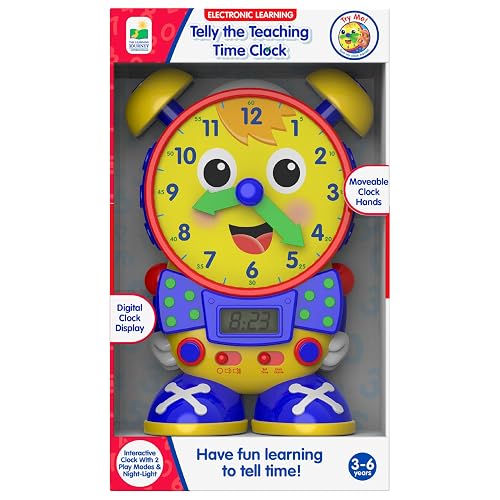 Best for interactive time practiceThe Learning Journey Telly the Teaching Time ClockView on Amazon
- 6
 Best budget pick for a simple digital displayLearning Resources Digital Clock for ClassroomView on Amazon
Our Top Picks
Quick Comparison
| Product | Best for | Key feature |
|---|---|---|
| Stay-in-Bed Clock for Kids | Overall sleep training | Night light and wake-time display |
| Kids Alarm Clock, Ok to Wake Clock | Color-coded bedtime rules | Green light and red light signals |
| LittleHippo Mella | Sound and light routines | Sleep sounds with a ready-to-rise light |
| Learning Resources Classroom Clock | Learning analog time | Large movable hands |
| The Learning Journey Telly the Teaching Time Clock | Interactive time practice | Analog and digital time modes |
| Learning Resources Digital Clock | Simple digital time reading | Bright digital display |
Stay-in-Bed Clock for Kids
Stay-in-Bed Clock for Kids – Toddler Sleep Trainer, Night Light & Alarm
Best for: Overall sleep training with a clear visual cue for when to stay in bed.
This option suits families who want one device that handles both the night light and the wake-up signal. It is designed around the idea that a toddler needs a simple, consistent sign that the night is still on.
Key specs
- Built-in night light
- Visual wake-time indicator
- Alarm function
Pros
- Combines night light and wake signal in one unit
- Simple enough for toddlers to understand
- Owners often report it works well alongside a consistent bedtime routine
Cons
- Results depend heavily on consistent use over several weeks
- May be too bright for some light-sensitive children
Bottom line: A strong first choice for parents who want a single, straightforward sleep trainer.
Kids Alarm Clock, Ok to Wake Clock with Green Light Red Light
Kids Alarm Clock, Ok to Wake Clock with Green Light Red Light, Toddler Sleep Training Clock for Children
Best for: Color-coded bedtime rules that toddlers can read before they can tell time.
This model fits children who respond well to color cues. The red light signals stay in bed, and the green light signals it is okay to get up, which many parents find easier to explain than a clock face.
Key specs
- Green light and red light wake signals
- Designed as a toddler sleep training clock
Pros
- Color rules are easy for toddlers to recognize
- Clear, no-reading-required signal
- Works well as a visual reminder during the early weeks
Cons
- Limited for teaching actual time-telling
- Owners sometimes mention the need to explain the rule repeatedly
Bottom line: Best for families who want the simplest possible visual rule for bedtime and morning.
LittleHippo Mella: Kids Alarm Clock, Ready to Rise Children’s Sleep Trainer
LittleHippo Mella: Kids Alarm Clock, Ready to Rise Children's Sleep Trainer, Night Light, Sound Machine and OK to Wake for Toddlers and Kids – Arctic Blue (Updated 2025)
Best for: Sound and light routines for toddlers who settle better with gentle audio.
The Mella combines a ready-to-rise light with sound options, which can help create a calm wind-down. Families with light-sensitive toddlers or noisy households often look at this category for that reason.
Key specs
- Ready-to-rise light signal
- Built-in sound machine functions
- Alarm function
Pros
- Sound options can mask household noise
- Gentle light transition for waking
- Covers both sleep and wake needs
Cons
- More features can mean a slightly longer setup
- Some toddlers may need time to adjust to the sounds
Bottom line: A good pick for families who want sound and light working together in one device.
Learning Resources Classroom Clock
Learning ResourcesClassroom Clock, Clocks for Kids, Learning Time Manipulatives, Teaching Toy for Kids, Toddler Manipulatives Big Time Mini Clock
Best for: Learning analog time alongside a sleep routine as children get older.
This is a teaching clock rather than a sleep trainer. It suits parents of toddlers approaching preschool age who want to introduce clock reading during daytime play, not as a bedtime device.
Key specs
- Movable hour and minute hands
- Classroom-style analog face
Pros
- Helps build early time-telling skills
- Hands are easy for small fingers to move
- Widely used in classroom settings
Cons
- Does not provide a sleep or wake signal
- Better suited to ages around 3 and up
Bottom line: Ideal for families who want a learning tool, paired with a separate sleep trainer if needed.
The Learning Journey Telly the Teaching Time Clock
The Learning Journey Telly the Teaching Time Clock – Interactive Analog & Digital Time Learning Toy – Educational Toddler Clock for Ages 3+ – Award-Winning
Best for: Interactive time practice that keeps a child engaged during daytime learning.
Telly is built for hands-on time learning, with analog and digital modes. It is designed for children around age 3 and older, so it fits best in the later toddler years.
Key specs
- Analog and digital time modes
- Interactive teaching design
- Labeled for ages 3 and up
Pros
- Connects analog and digital time reading
- Interactive format holds attention
- Good match for preschool readiness
Cons
- Not intended as a bedtime or wake signal
- Age labeling means it may be too advanced for younger toddlers
Bottom line: A good learning companion for older toddlers, not a standalone sleep trainer.
Learning Resources Digital Clock for Classroom
Learning ResourcesDigital Clock for Classroom, Telling Time, Kids Timer, Homeschool Essentials, Montessori, Toddler School Supplies Tock The Learning Clock, Pink
Best for: Simple digital time reading in a budget-friendly format.
This digital model offers a straightforward display for families who want to introduce digital time without a complex interface. It works well as a daytime learning tool and can be placed in a play area.
Key specs
- Digital time display
- Classroom-style design
Pros
- Clear digital numbers are easy to read
- Simple design with few distractions
- Generally a budget-friendly option in the category
Cons
- No built-in sleep or wake signal
- Not designed for nighttime use
Bottom line: A practical choice for daytime digital time practice, not for sleep training.
Buying Guide
Sleep Signal Type
Decide first whether you need a sleep trainer or a teaching clock. Sleep trainers use a color, light or sound signal to show when it is time to stay in bed or get up. Teaching clocks help children learn time but do not manage bedtime. Many families use one of each.
Good picks for this: Stay-in-Bed Clock for Kids, Kids Alarm Clock with Green Light Red Light
Light Level and Night Light Brightness
A night light that is too bright can delay sleep, while one that is too dim may not reassure a toddler who wakes in the dark. Look for a warm, low-intensity glow and check whether the brightness can be adjusted. Test it at bedtime before relying on it.
Good picks for this: Stay-in-Bed Clock for Kids, LittleHippo Mella
Sound Options
Some toddlers settle better with white noise or gentle sounds, while others are distracted by them. If your child wakes easily from household noise, a clock with sound settings can help. Start at a low volume and adjust gradually.
Good picks for this: LittleHippo Mella
Ease of Use for Toddlers
Color signals and large, simple displays are easier for a young child to understand than small buttons or complex menus. Consider whether your toddler can read the signal without help and whether a parent can set it up quickly at night.
Good picks for this: Kids Alarm Clock with Green Light Red Light, Learning Resources Digital Clock for Classroom
Age Appropriateness
Some teaching clocks are labeled for ages 3 and up. For a younger toddler, a sleep-focused device usually makes more sense. For an older toddler approaching preschool, an interactive time clock can build useful skills. Check the manufacturer’s age guidance before buying.
Good picks for this: Learning Resources Classroom Clock, The Learning Journey Telly the Teaching Time Clock
Durability and Materials
Toddlers handle objects roughly. Look for sturdy casings, secure battery compartments and hands or buttons that resist breaking. Plastic clocks designed for classrooms are often built to withstand regular use. Check whether the battery cover requires a tool, which can help prevent little fingers from opening it.
Good picks for this: Learning Resources Classroom Clock, Learning Resources Digital Clock for Classroom
Care and Cleaning
Wipe the clock with a damp cloth and mild soap, keeping electronics dry. Keep it out of reach of water sources, and replace batteries when the display dims or the signal becomes unreliable. Follow the manufacturer’s care instructions for the specific model.
Good picks for this: Stay-in-Bed Clock for Kids, LittleHippo Mella
FAQ
Do learn & climb toddler sleep clocks actually work?
They can help when used consistently with a predictable bedtime routine. A visual signal gives a toddler a clear rule, but results vary by child and usually take several weeks of steady use. They work best as one part of a broader sleep plan.
What age is a sleep clock appropriate for?
Many sleep clocks are marketed for toddlers and preschoolers, often from around age 2 or 3. Check each manufacturer’s age guidance and consider your child’s temperament and language skills.
Is a teaching clock the same as a sleep trainer?
No. Teaching clocks help children learn to read time during daytime play. Sleep trainers use lights, colors or sounds to signal when it is time to sleep or wake. Some families use both.
Should the night light stay on all night?
Many parents keep a low-level night light on so toddlers feel reassured if they wake. Choose a warm, dim glow and avoid bright white light near the bed. Adjust based on what helps your child settle.
How do I introduce the clock to my toddler?
Explain the rule in simple words during the day, such as “stay in bed until the light turns green.” Practice during naps or quiet time, and use the same phrase each night. Consistency matters more than the specific device.
What if my toddler gets out of bed when the light is still red?
Calmly return your child to bed without extended conversation or play. Repeat the same response each time, and reward staying in bed in the morning. Many parents find it takes several nights before the pattern settles. If sleep problems persist, talk with your pediatrician, since sleep issues can have medical causes.
Are sleep clocks safe to use in a toddler’s room?
Choose devices with secure battery compartments and keep cords, if any, out of reach. Place the clock on a stable surface away from the crib or bed edge. For specific safety questions, consult your pediatrician or a certified child safety professional.
Conclusion
For most families looking for a learn & climb toddler sleep clock, the Stay-in-Bed Clock for Kids offers the most complete combination of night light and wake signal. Families who want the simplest color rule should look at the green light and red light model. Parents who want sound and light together may prefer the LittleHippo Mella. If your main goal is teaching time rather than sleep, the Learning Resources Classroom Clock, The Learning Journey Telly and the Learning Resources Digital Clock are better matches. Many families combine a sleep trainer with a teaching clock for the best of both.
Sources
- Consumer product safety guidance on children's sleep products and battery safety (cpsc.gov)
- Pediatric guidance on toddler sleep routines and bedtime habits (healthychildren.org)
- Research summaries on sleep needs and development in early childhood (nih.gov)
Related reading
- Kmart Sleep Trainer Toddler Clock Manual: Setup and Use in 7 Steps
- 7 Best Toddler Sleep Training Clock Picks for Better Nights (2026)
- 6 Best Toddler Sleep Trainer Clocks for Better Nights (2026)
About Caleb Morgan
Caleb Morgan is part of our editorial team and reviews and edits our toddler development & behavior guides, checking product details against manufacturer specifications and owner feedback.









