 By Caleb Morgan
Updated November 2026
Parents searching for the best books on toddler sleep usually want one of three things: a clear method for getting a toddler to fall asleep on their own, help figuring out why bedtime keeps falling apart, or a reassuring read that makes the process feel manageable. This list focuses on five books that cover those needs. We selected them by checking each title’s scope and intended age range, the reputation of its authors in pediatric sleep or child development, how clearly the approach is explained, and the kinds of feedback owners tend to share, such as whether the advice feels practical and whether the tone is supportive rather than judgmental.
Our top picks at a glance
- 1
 TOP CHOICEBest overallSolve Your Child's Sleep ProblemsView on Amazon
- 2
 TOP CHOICEBest for gentle, low-stress sleep trainingIt's Never Too Late to Sleep TrainView on Amazon
- 3
 TOP CHOICEBest for a step-by-step bedtime playbookToddler Sleep HacksView on Amazon
- 4
 Best for a calming bedtime storySleep Like a TigerView on Amazon
- 5
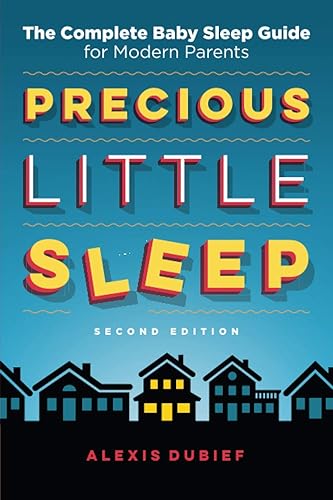 Best for parents who want a full baby-to-toddler referencePrecious Little SleepView on Amazon
Our Top Picks
| Product | Best for | Key feature |
|---|---|---|
| Solve Your Child’s Sleep Problems | Parents dealing with persistent sleep problems | Problem-by-problem troubleshooting from a long-established pediatric sleep author |
| It’s Never Too Late to Sleep Train | Parents who want a gentler approach | Low-stress, stepwise sleep training framework |
| Toddler Sleep Hacks | Parents who want a practical playbook | Action-oriented tactics organized around toddler routines |
| Sleep Like a Tiger | Families who read bedtime stories together | Calming picture-book narrative about falling asleep |
| Precious Little Sleep | Parents who want a single reference from infancy onward | Broad guide covering sleep across early childhood |
Solve Your Child’s Sleep Problems
Solve Your Child's Sleep Problems: New, Revised, and Expanded Edition
Best for: Overall reliability and troubleshooting specific sleep problems. We also found Fisher Price Learning Toys: 7 Best Picks for Babies and Toddlers (2026) useful on this point.
This is a well-known guide written by a pediatric sleep specialist and aimed at parents whose children resist bedtime, wake frequently or have trouble settling back to sleep. It suits families who want to match a problem to a specific explanation and a plan, rather than reading a single method from start to finish.
Key specs:
- Revised and expanded edition
- Problem-based chapters covering common childhood sleep issues
- Written for parents of children across early childhood
Pros:
- Organized by problem, which makes it easy to find the section you need
- Explains the reasoning behind each recommendation
- Covers a wide range of sleep issues in one book
Cons:
- Can feel dense for parents who want a quick, short read
- Some readers find the more structured methods harder to apply with a strong-willed toddler
Bottom line: A strong choice for parents who want a dependable reference and are willing to read a fuller text.
It’s Never Too Late to Sleep Train
It's Never Too Late to Sleep Train: The Low-Stress Way to High-Quality Sleep for Babies, Kids, and Parents
Best for: Gentle, low-stress sleep training.
This book is aimed at parents who are worried that sleep training will be harsh or emotionally hard on their child. It is also useful for families who have tried other methods and want an approach that moves more slowly and emphasizes consistency and reassurance.
Key specs:
- Focuses on low-stress sleep training approaches
- Covers babies, kids and parents, so it can be used beyond the toddler years
Pros:
- Tone is reassuring and nonjudgmental
- Gives a clear, stepwise structure for parents who like a plan
- Addresses parental stress as well as the child’s sleep
Cons:
- Gentle methods can take longer to show results, which may frustrate some parents
- Less focused on the specific challenges of toddler resistance than some other titles
Bottom line: Best for parents who want to improve sleep without feeling they have to choose between their child’s comfort and their own sanity.
Toddler Sleep Hacks
Toddler Sleep Hacks: The Playbook You Need to Tackle Your Toddler's Sleep
Best for: A practical, step-by-step bedtime playbook.
This title is designed for parents who want concrete tactics they can apply the same night, such as routine adjustments, nap timing and ways to handle bedtime stalling. It works well for parents who prefer short, action-focused chapters over long explanations.
Key specs:
- Organized around actionable tactics and routines
- Focused specifically on the toddler age range
Pros:
- Easy to scan and act on quickly
- Speaks directly to toddler-specific behavior such as stalling and bedtime protests
- Good for parents who want a plan rather than theory
Cons:
- Less depth on the underlying science than more research-heavy guides
- Newer titles like this have fewer long-term owner reviews to draw on
Bottom line: A good fit for busy parents who want a usable checklist-style approach to toddler bedtime.
Sleep Like a Tiger
Sleep Like a Tiger: A Soothing Bedtime Story About Falling Asleep for Children (Ages 4–8) (Caldecott Medal – Honors Winning Title(s))
Best for: A calming bedtime story.
This is a picture book rather than a parenting guide. It is meant to be read aloud at bedtime, helping children connect with the idea of winding down and falling asleep. It suits families who want a gentle, low-effort addition to their routine.
Key specs:
- Picture book format, read aloud
- Recognized with a Caldecott Medal honor
Pros:
- Easy to add to an existing bedtime routine
- Calm, soothing narrative that many families find helpful
- Award-recognized illustrations
Cons:
- It is a story, not a sleep training method, so it will not solve persistent sleep problems alone
- Aimed at a slightly older range than some toddlers, so younger children may lose interest
Bottom line: Best as a companion to a sleep plan, not a replacement for one.
Precious Little Sleep
Precious Little Sleep: The Complete Baby Sleep Guide for Modern Parents
Best for: A broad reference from infancy through early childhood.
This guide suits parents who want one book to consult as their child grows, rather than separate titles for each stage. It covers a wide sweep of sleep topics and is useful for families who expect sleep questions to change over time.
Key specs:
- Covers sleep from the baby stage onward
- Written for modern parents with a range of approaches
Pros:
- Useful across several developmental stages
- Covers a wide range of sleep topics in one place
Cons:
- Breadth can mean less depth on toddler-specific issues
- Parents with a specific toddler problem may need to search the book for the relevant section
Bottom line: A good all-in-one reference for parents who want continuity from infancy into the toddler years.
Buying Guide
Match the book to your main problem
Before choosing, identify what is actually happening. Bedtime battles, frequent night waking, early rising and difficulty settling after a transition each call for different advice. A problem-based guide suits parents with several issues at once, while a single-method book suits parents with one clear goal.
Good picks for this: Solve Your Child’s Sleep Problems, Toddler Sleep Hacks
Consider your sleep training philosophy
Sleep training approaches range from structured check-in methods to gentler, more gradual options. Think about how much crying you are comfortable with, how consistent you can be, and whether you prefer a fast or slow timeline. Read the introduction of any book to see how it frames the approach before you buy.
Good picks for this: It’s Never Too Late to Sleep Train, Solve Your Child’s Sleep Problems
Check the age range
Many sleep books are written for infants, and some cover only the first year. If your child is between about 12 and 36 months, confirm the book addresses toddler-specific issues such as bedtime stalling, nap transitions and fear of the dark, rather than only newborn feeding schedules.
Good picks for this: Toddler Sleep Hacks, Precious Little Sleep
Decide between a guide and a storybook
A parenting guide gives you a method, while a picture book gives your child a calming routine element. Many families use both: a storybook for the bedtime ritual and a guide for the problem-solving. Neither replaces the other if you are dealing with persistent sleep difficulties.
Good picks for this: Sleep Like a Tiger, Solve Your Child’s Sleep Problems
Think about how you like to read
Some parents want to read cover to cover before starting, while others need quick answers in the middle of the night. Look at the chapter structure and whether the book is organized by topic or by method. A well-indexed book can save time when you are tired and short on patience.
Good picks for this: Toddler Sleep Hacks, Solve Your Child’s Sleep Problems
Look at the tone and emotional approach
Your own comfort matters. If you find directive language stressful, choose a book that frames advice as supportive. If you want clear rules, choose one with step-by-step instructions. The right tone is the one you are most likely to stick with for several weeks.
Good picks for this: It’s Never Too Late to Sleep Train, Precious Little Sleep
Plan for a consistent application
Any sleep book works only if you apply it consistently. Choose a method that fits your household’s schedule, partner involvement and tolerance for disruption. Expect that most sleep changes take one to several weeks to appear, and plan your reading accordingly so you do not switch approaches too early.
Good picks for this: Solve Your Child’s Sleep Problems, It’s Never Too Late to Sleep Train
FAQ
Which book is best for a toddler who won’t stay in bed?
Books that address bedtime resistance and stalling, such as Toddler Sleep Hacks, tend to offer toddler-specific tactics for this problem. Problem-based guides like Solve Your Child’s Sleep Problems can also help you match the behavior to a plan.
Are sleep training books safe for toddlers?
Most mainstream sleep books are written by parents or professionals and aim to be safe and age-appropriate. Always follow your pediatrician’s guidance, especially if your child has medical conditions, breathing concerns or a history of sleep problems. If you are unsure, consult a professional before starting any method.
Can a picture book really help with sleep?
A calming bedtime story can make the routine more predictable and relaxing, which many families find useful. It is not a sleep method on its own, so pair it with a clear plan if you have persistent problems. Sleep Like a Tiger works best as part of that routine.
How long does it take to see results from a sleep book?
Results vary by child, method and consistency. Many parents report noticeable changes within one to two weeks of consistent application, while gentler approaches may take longer. Give any method a fair trial before deciding it is not working.
Should I read more than one sleep book?
Reading more than one can give you a broader view, but switching methods frequently can confuse your child and make progress harder to measure. Choose one main guide and use others only as reference for specific problems.
Do I need a book if my toddler sleeps badly only sometimes?
Occasional disrupted sleep is common during illness, travel, teething or big changes at home. A book is most helpful when problems are persistent or affecting your family’s wellbeing. For ongoing concerns, talk with your pediatrician.
Are these books useful for toddlers who wake at night?
Yes. Solve Your Child’s Sleep Problems and Precious Little Sleep both cover night waking. Consider also reading related guides on specific issues, such as Toddler Naps Well But Doesn't Sleep at Night: 7 Best Books and Guides (2026) or Overtired Toddler Won't Go to Sleep: 7 Best Books and Guides (2026).
Conclusion
For most parents looking for the best books on toddler sleep, Solve Your Child’s Sleep Problems is a dependable, problem-focused starting point. Parents who want a gentler approach should consider It’s Never Too Late to Sleep Train, while those who want quick, action-oriented steps may prefer Toddler Sleep Hacks. Sleep Like a Tiger is a useful bedtime story to pair with any plan, and Precious Little Sleep works well as a long-term reference. If your toddler’s sleep problems are severe or persistent, also see Gentle Sleep Training Toddler: 7 Best Books and Guides (2026) and Supernanny Sleep Training Toddler: 7 Best Books and Guides (2026) for alternative approaches, and speak with your pediatrician.
Sources
- American Academy of Pediatrics guidance on sleep for infants and young children (healthychildren.org)
- Recommendations on healthy sleep habits and sleep duration for children (cdc.gov)
- Research summaries on childhood sleep and development (nih.gov)
About Caleb Morgan
Caleb Morgan is part of our editorial team and reviews and edits our toddler development & behavior guides, checking product details against manufacturer specifications and owner feedback.