 By Caleb Morgan
Updated November 2026
When a toddler naps well but doesn’t sleep at night, parents often assume the daytime routine is fine and something else is broken. In most cases the problem is more specific: bedtime timing, a wind-down that doesn’t signal sleep, night wakings, or a child who is getting enough total rest but not in the right place. The seven resources below were chosen to help parents work through that exact pattern. Selection criteria: the author’s credentials and research basis, how directly the book addresses toddler nighttime sleep (not just infants), clarity of the step-by-step guidance, and the kinds of reader feedback that appear consistently, such as owners often report that the sleep-training chapters are detailed but that some methods need adapting for a toddler who can climb out of bed.
Best overall: Cole Novak The Toddler Sleep Reset – View on Amazon
Best for research-based sleep science: Marc Weissbluth M.D. Healthy Sleep Habits, Happy Child – View on Amazon
Best for sleep-disorder background: Jodi A. Mindell Sleeping Through the Night – View on Amazon
Best for a gentle, rhythm-based approach: Polly Moore Ph.D. The Natural Baby Sleep Solution – View on Amazon
Best for toddler bedtime routines: Brave Little Steps Bedtime Routine Training for Toddlers – View on Amazon
Best for a science-backed overview: Heather Turgeon MFT The Happy Sleeper – View on Amazon
Best supplement-style option: Mommy’s Bliss Organic Baby Bedtime Drops – View on Amazon
Our Top Picks
Quick Comparison
| Product | Best for | Key feature |
|---|---|---|
| Cole Novak The Toddler Sleep Reset | Parents who want a structured, step-by-step plan | Seven-step bedtime framework |
| Polly Moore Ph.D. The Natural Baby Sleep Solution | Parents who prefer working with the child’s rhythms | Internal sleep rhythm approach |
| Mommy’s Bliss Organic Baby Bedtime Drops | Parents looking for a non-melatonin bedtime product | Melatonin-free, organic formulation |
| Jodi A. Mindell Sleeping Through the Night | Parents who want sleep guidance grounded in clinical research | Revised edition covering infants through toddlers |
| Marc Weissbluth M.D. Healthy Sleep Habits, Happy Child | Parents who want a detailed, science-led reference | Fifth edition with step-by-step sleep guidance |
| Brave Little Steps Bedtime Routine Training for Toddlers | Parents of toddlers who need a hands-on routine tool | Interactive activity book for building a routine |
| Heather Turgeon MFT The Happy Sleeper | Parents who want a broad, science-backed overview | Covers newborn through school age |
Cole Novak The Toddler Sleep Reset: The Exhausted Parent’s 7-Step Guide to Peaceful Bedtimes, Quieter Nights, and Getting Your Evenings Back

Cole Novak The Toddler Sleep Reset: The Exhausted Parent's 7-Step Guide to Peaceful Bedtimes, Quieter Nights, and Getting Your Evenings Back
Best for: Parents whose toddler naps reliably but resists or wakes at night and who want a clear, ordered plan.
This book is written specifically for the toddler stage rather than infancy, which matters when the child can stand, talk, and leave the room on their own. It suits parents who feel they have tried many tips without a sequence to follow. The seven-step structure gives a way to test one change at a time.
Key specs:
- Format: paperback guide
- Focus: toddler bedtimes and nighttime sleep
- Structure: seven-step framework
Pros:
- Built around the toddler years instead of newborn sleep
- Clear, sequential steps that are easy to follow
- Addresses bedtime and night wakings in one plan
Cons:
- Less scientific detail than dedicated sleep-research texts
- Some parents report the plan needs adjusting for very strong-willed children
Bottom line: A strong first pick for parents who want a practical, organized plan for a toddler who naps well but struggles at bedtime.
Polly Moore Ph.D. The Natural Baby Sleep Solution: Use Your Child’s Internal Sleep Rhythms for Better Nights and Naps
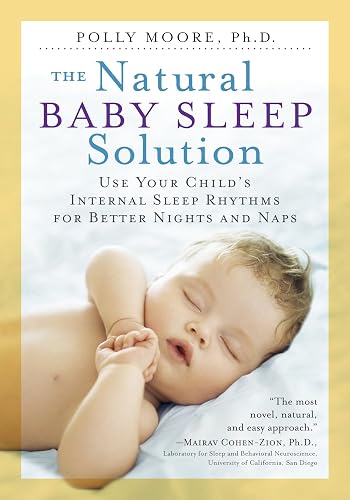
Polly Moore Ph.D. The Natural Baby Sleep Solution: Use Your Child's Internal Sleep Rhythms for Better Nights and Naps
Best for: Parents who want a gentler, rhythm-based approach rather than structured sleep training.
Parents who feel uncomfortable with cry-based methods often look here first. The book centers on reading a child’s natural sleep cues and timing, which can help when a toddler is tired during the day but gets a second wind at night.
Key specs:
- Format: paperback guide
- Approach: rhythm and cue-based sleep
Pros:
- Gentle approach that avoids strict crying protocols
- Helpful framing of daytime and nighttime sleep as connected
- Easy to read in short sessions
Cons:
- Parents who need a fast fix may find the pace slow
- Less specific to toddlers who resist bedtime after a nap
Bottom line: Best for families who prefer a gentle method and are willing to be patient with timing adjustments.
Mommy’s Bliss Organic Baby Bedtime Drops + Overnight Immunity Support, Promotes Restful Night, Melatonin Free, Age 4 Month+, 2 Fl Oz

Mommy's Bliss Organic Baby Bedtime Drops + Overnight Immunity Support*, Promotes Restful Night, Melatonin Free, Age 4 Month+, 2 Fl Oz
Best for: Parents looking for a non-melatonin bedtime product as part of a broader routine.
This is a supplement rather than a book, included because some parents look for an add-on during a sleep transition. It is not a substitute for a consistent routine, and families should talk with a pediatrician before giving any supplement to a toddler.
Key specs:
- Format: liquid drops, 2 fl oz
- Labeled melatonin free
- Listed age range: 4 months and up
Pros:
- Melatonin-free formulation
- Simple to add to an existing bedtime routine
- Labeled for use from early infancy
Cons:
- Benefits for sleep are not firmly established by strong evidence
- Not a behavioral solution to night wakings
Bottom line: Consider only after discussing it with a pediatrician, and treat it as a supplement to, not a replacement for, a consistent bedtime routine.
Jodi A. Mindell Sleeping Through the Night, Revised Edition: How Infants, Toddlers, and Their Parents Can Get a Good Night’s Sleep – A Sleep Guide

Jodi A. Mindell Sleeping Through the Night, Revised Edition: How Infants, Toddlers, and Their Parents Can Get a Good Night's Sleep ― A Sleep Guide
Best for: Parents who want sleep guidance grounded in clinical research and a broad view of nighttime sleep.
Mindell is a sleep researcher, and this book draws on that background. It is useful for parents who want to understand why toddlers wake at night before choosing a method, and it covers common issues such as bedtime resistance and night waking.
Key specs:
- Revised edition
- Covers infants through toddlers
Pros:
- Written by a sleep researcher with clinical grounding
- Explains the reasons behind night waking, not just the fixes
- Covers a range of methods so parents can choose
Cons:
- Can be more information than a tired parent wants at 2 a.m.
- Some readers want a more single-path plan
Bottom line: A solid choice for parents who want to understand the research before committing to a method.
Marc Weissbluth M.D. Healthy Sleep Habits, Happy Child, 5th Edition: A New Step-by-Step Guide for a Good Night’s Sleep

Marc Weissbluth M.D. Healthy Sleep Habits, Happy Child, 5th Edition: A New Step-by-Step Guide for a Good Night's Sleep
Best for: Parents who want a detailed, science-led reference with step-by-step guidance.
Weissbluth is a long-established name in children’s sleep. This edition is useful for parents who want depth, especially around how sleep schedules and daytime naps relate to nighttime behavior, which fits a toddler who naps but won’t sleep at night.
Key specs:
- Edition: fifth
- Format: step-by-step guide
Pros:
- Detailed explanation of nap and night sleep relationships
- Long-standing reputation among sleep-focused parents
- Step-by-step structure for implementing changes
Cons:
- Dense for readers who want a quick read
- Some methods require a firm, consistent approach that not every family can sustain
Bottom line: Best for parents who want a thorough, evidence-informed reference and are ready to work through it in detail.
Brave Little Steps Bedtime Routine Training for Toddlers: Fun and Interactive Activity Book to Build Healthy Sleep Habits, Calm Night Routine, and Independence for Kids

Brave Little Steps Bedtime Routine Training for Toddlers: Fun & Interactive Activity Book to Build Healthy Sleep Habits, Calm Night Routine, and Independence for Kids … Steps – Learning Life Skills
Best for: Parents of toddlers who need a hands-on, child-facing tool to build a bedtime routine.
This is an activity book rather than a parent guide. It is designed to involve the child in the routine, which can help when the toddler is the one resisting bed. It works best alongside a parent-focused resource.
Key specs:
- Format: interactive activity book
- Focus: bedtime routine and independence
Pros:
- Involves the toddler directly in the routine
- Interactive format suits short attention spans
- Supports the independence side of bedtime
Cons:
- Offers less parent-facing explanation of why sleep problems occur
- Works best as a supplement rather than a standalone plan
Bottom line: A good addition for parents who want to make the bedtime routine something their toddler can take part in.
Heather Turgeon MFT The Happy Sleeper: The Science-Backed Guide to Helping Your Baby Get a Good Night’s Sleep, Newborn to School Age

Heather Turgeon MFT The Happy Sleeper: The Science-Backed Guide to Helping Your Baby Get a Good Night's Sleep-Newborn to School Age
Best for: Parents who want a broad, science-backed overview that spans early childhood.
Turgeon’s book covers sleep from newborn through school age, which makes it useful as parents move through different stages. It is a reasonable choice for families who want one main reference that connects toddler sleep to the larger picture.
Key specs:
- Age coverage: newborn to school age
- Format: guide
Pros:
- Wide age range useful across childhood
- Science-backed framing of sleep needs
- Accessible writing style
Cons:
- Broader coverage means less depth on toddler-specific problems
- Parents with a specific night-waking issue may need a more targeted resource
Bottom line: A good general reference for parents who want one book to grow with their child.
Buying Guide
Match the Book to the Problem
Not every sleep book addresses the same issue. A toddler who naps well but wakes or resists at night needs guidance on bedtime timing, the bedtime routine, and how to respond to night waking. Look for resources that name toddler bedtime specifically rather than only infant sleep. Books that cover night waking as a separate topic tend to be more useful here.
Good picks for this: Cole Novak The Toddler Sleep Reset, Jodi A. Mindell Sleeping Through the Night
Check the Age Range
Many sleep guides are written mainly for babies. Toddlers have different needs: they can climb out of bed, talk back, and understand negotiation. A book that covers infants through toddlers, or that is written for toddlers only, will usually give more relevant advice. Check the stated age focus before buying.
Good picks for this: Cole Novak The Toddler Sleep Reset, Heather Turgeon MFT The Happy Sleeper
Consider the Method
Sleep methods range from structured, step-based plans to gentle, rhythm-based approaches. Neither is automatically better. Choose the one your family can realistically keep up for several weeks. Read the method description before buying so you know whether it involves any form of timed or graduated response.
Good picks for this: Polly Moore Ph.D. The Natural Baby Sleep Solution, Marc Weissbluth M.D. Healthy Sleep Habits, Happy Child
Look at the Level of Detail
Some readers want a short, actionable guide. Others want the research behind the advice. Dense reference texts give more background but take longer to work through. If you are short on time, prefer a guide with clear steps. If you want to understand the reasons, choose a research-led book.
Good picks for this: Jodi A. Mindell Sleeping Through the Night, Marc Weissbluth M.D. Healthy Sleep Habits, Happy Child
Involve Your Child When It Helps
When a toddler resists bedtime, a child-facing activity book can make the routine more predictable and give the child a sense of control. Choose interactive materials that match your child’s reading level and attention span. They work best as a supplement to a parent-focused plan.
Good picks for this: Brave Little Steps Bedtime Routine Training for Toddlers
Be Cautious With Supplements
Some families look at bedtime drops or other sleep aids. Read the label carefully, check the stated age range, and do not give any product to a toddler without first speaking with your pediatrician. A supplement should never replace a consistent routine, and it is not a fix for a sleep problem that has a medical cause.
Good picks for this: Mommy’s Bliss Organic Baby Bedtime Drops (after discussing with a pediatrician)
Choose a Resource You Will Actually Use
A good sleep book is only useful if you read it and apply it. Prefer a format that fits your schedule: a short guide for busy evenings, a thorough reference for a planned weekend of change. Consistency over several weeks matters more than finding the perfect book.
Good picks for this: Heather Turgeon MFT The Happy Sleeper, Cole Novak The Toddler Sleep Reset
FAQ
Why does my toddler nap well but not sleep at night?
Several factors can play a role, including a nap that is too late in the afternoon, an overtired or undertired child at bedtime, a bedtime routine that is too stimulating, or a shift in sleep needs as toddlers grow. Because the child naps easily, the issue is usually timing or routine rather than an inability to sleep. If night problems are severe or sudden, talk with your pediatrician.
How long should a toddler nap if they are sleeping well during the day?
Most toddlers between about 1 and 3 years old need roughly 11 to 14 hours of sleep in a 24-hour period, including naps, according to general guidance from sleep organizations. Many toddlers take one nap of one to two hours. A long late-afternoon nap can make bedtime harder, so consider moving the nap earlier if bedtime resistance continues.
Should I let my toddler cry it out at night?
Cry-based sleep methods are one option, but they are not the only one, and they are not right for every family. Some parents prefer gentler, check-in or rhythm-based approaches. Choose a method you can apply consistently, and consult your pediatrician if you have concerns about your child’s health or development.
Is a bedtime routine really necessary for toddlers?
A predictable routine helps many toddlers shift from play to sleep. A routine of about 20 to 30 minutes, performed in the same order each night, is commonly recommended. Keep it calm: a bath, pajamas, a short book, and lights out work well for many families.
Are melatonin or sleep supplements safe for toddlers?
Do not give any sleep supplement, including melatonin or bedtime drops, to a toddler without first speaking with a pediatrician. Product labels and age ranges vary, and a doctor can advise whether any product is appropriate for your child’s situation.
When should I see a doctor about my toddler’s night sleep?
Contact your pediatrician if your toddler snores loudly, pauses in breathing, seems to struggle to breathe, has frequent night terrors, or if sleep problems are persistent and affecting daytime behavior or family health. These can be signs of an issue that needs medical evaluation.
How long does it take to see results from a sleep plan?
Many families notice some change within one to two weeks of consistent application, though the timeline varies. Changing one element at a time, rather than several at once, makes it easier to see what is working. Give a plan a fair trial before switching.
Conclusion
A toddler who naps well but doesn’t sleep at night is usually dealing with a fixable pattern involving timing, routine, or response to night waking. For a structured, toddler-specific plan, start with Cole Novak The Toddler Sleep Reset. For a gentler, rhythm-based approach, Polly Moore Ph.D. The Natural Baby Sleep Solution is a good fit. Parents who want research depth should consider Jodi A. Mindell Sleeping Through the Night or Marc Weissbluth M.D. Healthy Sleep Habits, Happy Child. Families who want a child-facing tool can add Brave Little Steps Bedtime Routine Training for Toddlers. For more background on related problems, see Toddler Won't Sleep at Night: A Step-by-Step Guide for Parents and Toddler Won't Sleep During the Day? 7 Steps That Help (2026). If night problems persist or concern you, speak with your pediatrician.
Sources
- Guidance on healthy sleep and sleep needs for children (cdc.gov)
- Recommendations from the American Academy of Pediatrics on children's sleep (aap.org)
- Research summaries on sleep in early childhood (nih.gov)
Related reading
About Caleb Morgan
Caleb Morgan is part of our editorial team and reviews and edits our toddler development & behavior guides, checking product details against manufacturer specifications and owner feedback.









